TomJoy School Enhances Storytelling & Peer-to-Peer Learning Using Steve AI

Company:

In an era where digital adoption in education is key, TomJoy Elementary School, a digital-first school in Nashville, Tennessee, USA, has emerged as a leader in integrating top-tech products for learning. Focused on project-based learning (PBL) for diverse age groups, the school sought to enhance its young scholars' visual storytelling and collaboration skills. This case study explores how TomJoy partnered with Steve AI to empower 4th-grade students to create digital projects, igniting peer-to-peer learning and creativity without overwhelming them with complex tools.

Challenges:

Before implementing Steve AI, TomJoy faced several challenges in achieving its digital learning goals:
  • Need for a Child-Friendly Creative Tool: The school required a video creation platform that was easy enough for 4th graders (ages 7-8) to use independently, without overstimulating graphics or steep learning curves that could hinder concentration.
  • Balancing AI with Creativity: TomJoy wanted to introduce AI in education without stifling students' imagination. Many AI tools are prompt-only and risk taking away creative control, whereas the school needed a "slate" or canvas where scholars could actively design and write their own stories.
  • Fostering Peer-to-Peer Learning: The school aimed to encourage collaborative learning where students could teach each other, share ideas, and expand learning beyond the classroom walls to include junior scholars.
  • Enhancing Visual Storytelling: It was important for teachers to hone students' narrative skills, but converting written stories into engaging videos was a daunting task for young learners using traditional methods.

Solution:

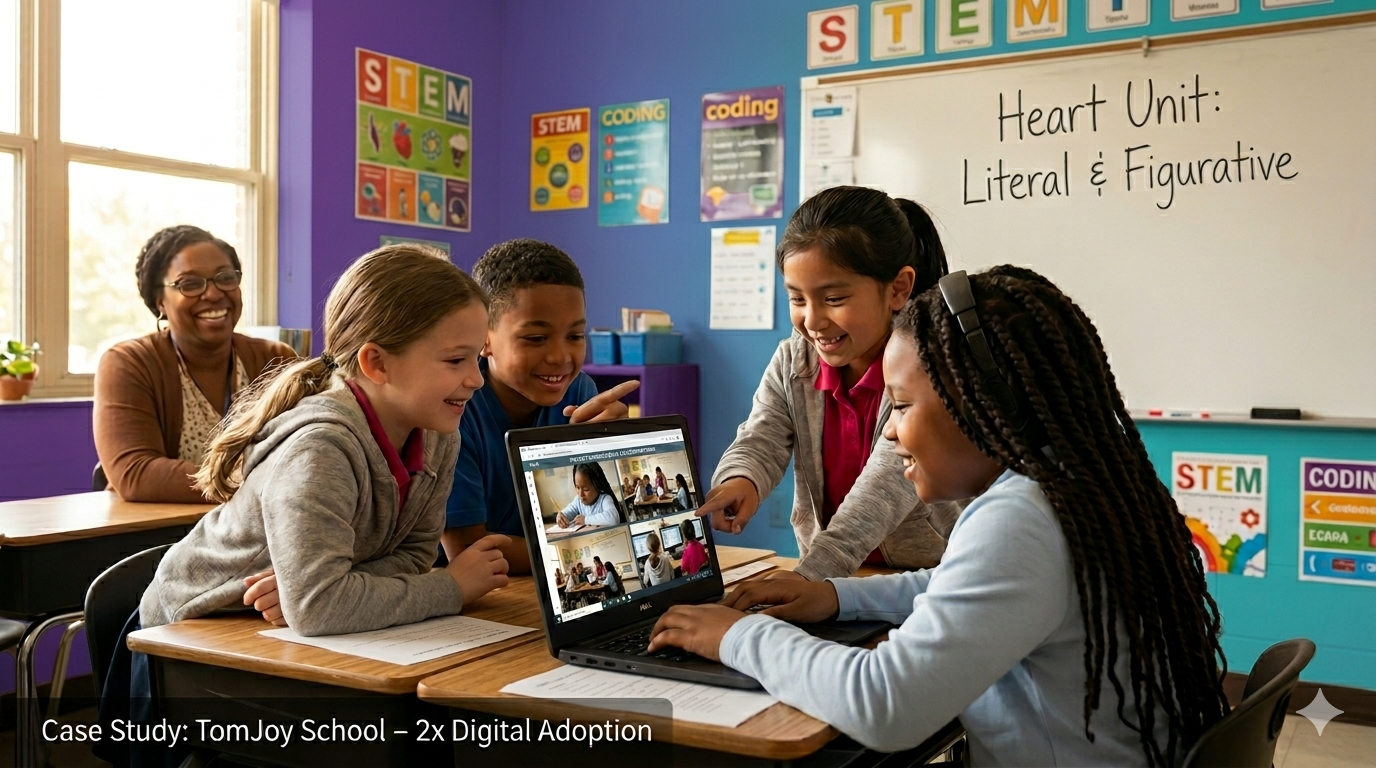
TomJoy found a groundbreaking solution by partnering with Steve AI and leveraging its easy-to-use, creativity-focused video generation platform. As noted by Dr. Nicole Glaze on platform X (formerly Twitter), "Our 4th-grade @TomJoyElem leaders are starting their PBL digital products using @steveaiHQ, sharing what it means to have a literal and figurative heart."
  • Easy-to-Use Interface for Young Scholars: Steve AI's pleasant, non-overstimulating interface allowed 4th graders to create videos and presentations independently, without adult assistance, making it a perfect fit for the classroom.
  • A Slate for Creativity, Not Just Prompts: Unlike prompt-only AI tools, Steve AI became a canvas. Students wrote their scripts, split stories into scenes, and designed output videos according to their own ideas, bringing their "Heart unit" learnings (literal and figurative heart, heart health) to life.
  • Enabling STEM & Text-to-Video Learning: Teachers used Steve AI's text-to-video feature to visually demonstrate STEM concepts, making lessons twice as effortless to teach. Scholars converted their written narratives into animated videos seamlessly.
  • Fostering Peer-to-Peer Collaboration: Students enjoyed creating videos together, teaching each other features like creating different characters. This collaboration extended beyond the 4th grade, as older scholars presented their Steve AI videos to 3rd graders, reinforcing peer-led learning.

Results:

The results of TomJoy's collaboration with Steve AI were impressive, exceeding the school's expectations for digital adoption and creative engagement:
2X4th GradeEnhanced
Digital Adoption RatePeer-to-Peer LearningVisual Storytelling Skills
  • Increased Digital Adoption: TomJoy doubled the digital adoption rate among scholars without hindering imagination or creativity. Students were motivated to create videos on their own and innovate in how they presented projects.
  • Successful STEM Integration: Teaching STEM concepts (like heart health) became easier and more engaging as students visually demonstrated their learning using Steve AI-generated videos.
  • Scaled Peer-to-Peer Learning: Peer learning expanded beyond the 4th-grade classroom, with students teaching junior scholars. Dr. Glaze tweeted, "4th grade presented their @steveaiHQ presentations to our 3rd-grade scholars on figurative and literal hearts."
  • Enhanced Storytelling Abilities: Students constructed their stories, split them into scripts on Steve AI, and added images/videos as needed, significantly improving their narrative and visual communication skills.

Conclusion

TomJoy School's partnership with Steve AI showcases how the right AI tool can revolutionize project-based learning in elementary education. By providing an intuitive-to-use, creativity-driven platform, Steve AI enabled young scholars to become confident digital creators, enhanced peer-to-peer learning, and improved visual storytelling, all while maintaining a fun, collaborative classroom environment. The school's initiative has created a ripple effect, inspiring other organizations in Nashville to adopt AI for learning.

Use Case:
Project-Based Learning, STEM Education, Digital Storytelling
Industry:
K-12 Education (Elementary School)
Country:
USA (Nashville, Tennessee)
Category:
AI Storytelling